“Turn Scrolling Into Engagement, and Engagement Into Growth.”
What Is Social Media Marketing?
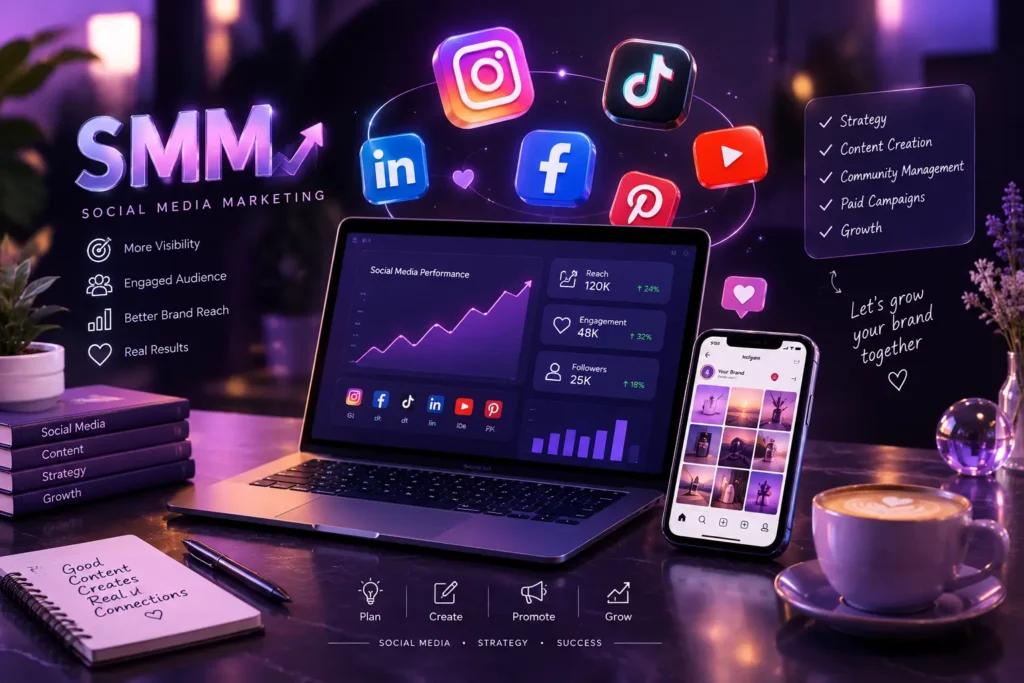
Social Media Marketing (SMM) is the process of promoting a brand, product, or service through social media platforms. It combines creative content with smart strategies to increase brand visibility, engage audiences, generate leads, and build long-term customer relationships.
Social media is more than just posting content—it’s about connecting with the right audience, building trust, and turning attention into meaningful business growth. Our Social Media Marketing services help brands create a strong social presence through strategic content, audience engagement, creative campaigns, and performance-driven strategies.

Turn Social Media Into Your Growth Engine
Social media has now become one of the most effective channels through which businesses can interact with their audiences. However, just by being present on Instagram, Facebook, and LinkedIn accounts alone, it won’t be sufficient for your business to succeed on social media. Your business needs the proper strategy, quality content, and an insight into your audience.
Our Social Media Marketing approach is geared toward helping your business use its social media presence as a channel for growth. Through our unique blend of creative content, audience insight, platform-specific strategy, and performance metrics, we help grow your brand’s exposure and connections. Content creation lies at the core of any good social media marketing strategy. We develop captivating posts, graphics, reels, carousels, and other types of content that will not only enable your brand to deliver a clear message but also engage your audience.
Relationships should be built using social media platforms. We pay great attention to interacting with the target audience via comments, messages, conversations, and relevant content. That way, we enable your audience to get to know more about your brand.
Unlock New Opportunities Through Social Media
YouTube (Video Marketing)
Purpose: Build brand awareness, educate audiences, increase engagement, and connect with potential customers.
Uses: Promote products, share tutorials, educate audiences, showcase testimonials, and create engaging YouTube Shorts.
Benefits: Increase visibility, build trust, improve engagement, drive website traffic, and support long-term business growth.
Instagram (Visual Branding)
Purpose: Build a strong visual identity.
Uses: Share engaging photos, reels, and stories.
Benefits: Boost brand awareness, engagement, and customer reach.

Facebook (Community & Ads)
Purpose: Build a strong community.
Uses: Engage audiences and run targeted ads.
Benefits: Increase brand awareness, traffic, and conversions.
What Marketing Means
Marketing is the practice of promoting goods or services, reaching out to the target audience, and developing customer relations. Marketing assists in recognizing consumer needs and raising awareness, attracting prospective buyers, and generating sales through these processes. Social media marketing, SEO, advertisements, and content marketing are some of the techniques employed by marketing to aid in achieving the objectives of a business entity.
Marketing happens both offline and online through channels like TV, print, and platforms such as Instagram, Facebook, and YouTube. In simple terms, marketing connects a business with its customers by delivering the right message to the right people at the right time.
Effective marketing helps businesses communicate their message clearly, stand out from competitors, and grow their brand presence in both online and offline markets
Two Categories Of Social Media Marketing
Organic SMM
Organic SMM
Organic Social Media Marketing (Organic SMM) aids in growing your business organically through the distribution of relevant content and interacting with your audience. It helps in building trust, increasing reach and engagement, and establishing customer relations without focusing extensively on paid advertising.
Understanding Organic SMM
Organic SMM focuses on increasing the presence of your social media accounts without the over-reliance on paid advertisement. Organic SMM involves creating content that is relatable, enjoyable and even beneficial for the followers’ needs. This type of social media marketing entails the publishing of beneficial posts, reels, stories, behind-the-scenes content as well as engaging with the comments and messages from the followers. The objective of organic SMM is to develop relationships with the audience and make the brand look friendly and approachable. If the followers see the content as beneficial and true, they will interact with it more actively. Besides, such content helps followers to recommend it to other people. Although the process of organic SMM takes time and consistency, the relationships built during this process tend to be more valuable than the paid ads.
The main goal of organic marketing is to build awareness, trust, and loyalty. Organic marketing offers long-term growth and strong customer relationships.
Understanding Paid SMM
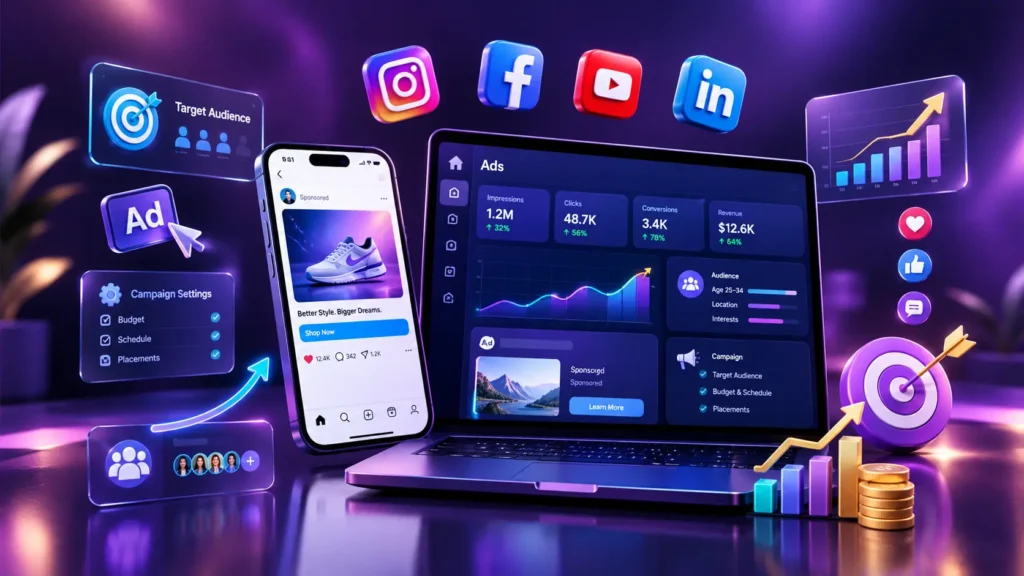
Paid SMM is one of the most effective strategies to target an audience through social media advertising. In contrast to organic methods where a company waits for its audience to find its content, paid SMM lets companies target certain individuals on the grounds of various criteria, including interests, geographical location, age group, online activity, etc. With the help of promoted posts on Instagram, Facebook, YouTube, LinkedIn, and other platforms, businesses are able to promote themselves and reach certain objectives, which may include building brand awareness, attracting more visits to the website, lead generation, promoting certain products or services, and converting more visitors into customers. What makes a successful paid SMM campaign? Firstly, it is necessary to understand the target audience. Then, the company should create appropriate ad creatives. Moreover, it is important to choose the goal of the campaign and manage its budget wisely. Finally, regular monitoring of the campaign performance indicators is essential. These metrics include clicks, impressions, engagement, conversions, and ROI, and they help to optimize the campaign performance. With proper planning and management, paid SMM is the strategy that helps a company to reach a broader audience and generate fast visibility in the desired social media.
How Social Media Drives Business Growth?
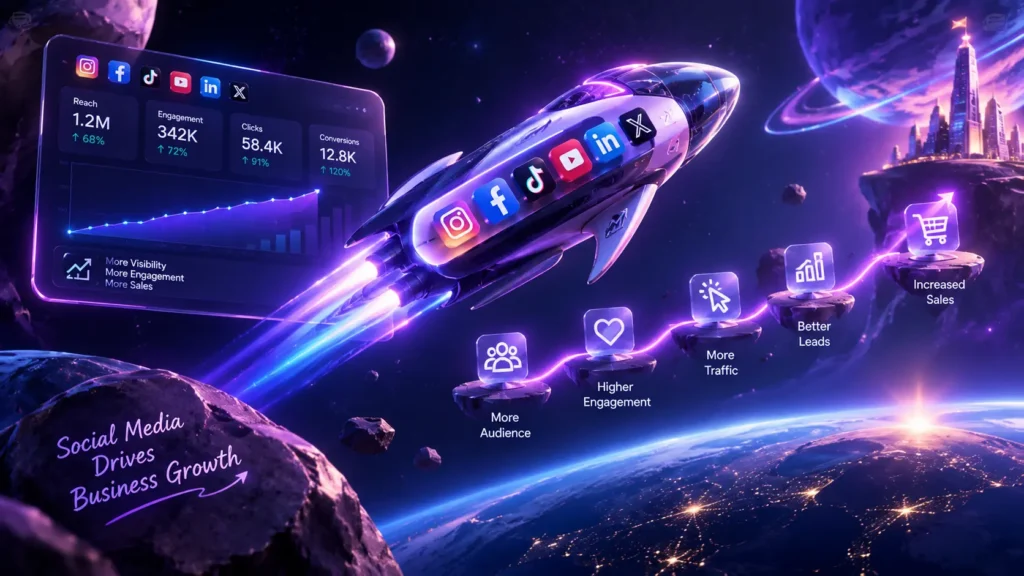
Social media has emerged as an important tool for companies to communicate with their audience, increase brand awareness and achieve growth online. Companies get an opportunity to easily connect with their existing and potential clients and also interact with them via social media. By using various social media channels like Instagram, Facebook, YouTube, and LinkedIn, companies can distribute informative content, post about their products and services, answer questions, get feedback from their audience, engage with them and constantly be in touch with them. As a result, consistent high-quality content will enable people to get acquainted with the brand and start trusting it. Social media allows increasing traffic to a company’s website thanks to posts, stories, videos and hyperlinks which can facilitate the process of lead generation and sales. With the help of paid advertisement, companies can also target certain audience, but the value of organic social media lies in constant engagement and creating of a community around the brand. Another advantage of social media for companies is that they get to know their audience’s preferences according to engagement level, number of comments, shares and other performance metrics. These metrics allow developing better content for brands and making adjustments to their marketing strategy. In a tough digital environment, social media does not only become an important promotional channel for businesses but also opens up numerous opportunities for relationship-building and achieving growth.
What is Social Media Marketing (SMM)?
What is the importance of SMM for businesses?
SMM helps a business create an awareness about the brand, communicate with customers, attract new leads, and maintain a good online presence.
Which social media platforms can businesses use?
Facebook, Instagram, LinkedIn, YouTube, X, and Pinterest are some of the commonly used social media networks among others.
What is the difference between Organic and Paid SMM?
Organic SMM involves efforts related to creating and engaging the community without using any paid promotions, whereas Paid SMM involves advertising on the social media network to reach out to the target audience.
How do you measure SMM performance?
Common metrics include reach, impressions, engagement, followers, clicks, leads, conversions, and return on advertising spend (ROAS).