Author name: Janvi

Number give data, AI give insight.

7 FAQs About Customer Psychology & Digital Marketing

In digital marketing, getting attention is only the beginning. It’s no use if someone notices you and goes over to your website, or even clicks to see more of your social media page, or spends time reading your content-what makes them believe you and have faith in you? The answer often lies in customer psychology.Every click online has a reason, that click has a thought or a need or an expectation behind it. Consumers don’t click because there is an advert. They click because an advert has something for their attention, an answer to their needs, something that piques their curiosity, something that builds their trust, because they already know the product is right for them. That’s why, leveraging customer psychology can make marketing efforts feel less superficial and more purposeful. The deets, from messaging to website colors, all add up when it comes to how customers view a brand. Seven Questions About Customer Psychology and Digital Marketing: How can companies leverage this knowledge into stronger digital experiences?  What Is Customer Psychology in Digital Marketing?  Customer psychology for digital marketing involves the insight into how people think, feel and behave when interacting with your brand.You will learn what attracts their attention, what builds their trust, what generates their interest, what influences them and what prompts them to take action. For instance, a person may visit one website versus another because it is more professional, loads quicker, offers a better page speed, provides more transparent information or displays reviews from other customers. That’s when digital marketing comes in; it is much more effective when companies approach their message with the customer in mind and how they will interpret what you are trying to say. Why Does Psychology Matter in Digital Marketing? Digital marketing isn’t about spreading the message to everyone. It’s about giving the right message to the right people at the right time.It can help businesses improve the relevance of their content or campaigns. Such a powerful message in your marketing can answer questions like:  What problem does the customer want to solve?What makes them trust a brand?What information do they need before buying?What might stop them from taking action?What type of content gets their attention?  When you understand these factors, you can produce marketing experiences for your brand that are more functional, authentic, and customer-centric.  1. How Do Emotions Influence Buying Decisions? Emotions drive many customer decisions.Consumers’ emotins might revolve around amazement at finding new products, fear of making incorrect decisions, to be filled with desire when they want to know what we will the offer or be sure after reading positive reviews. For instance, a travel brand might want to evoke a sense of wonder and adventure through stunning imagery. A security brand might focus on a sense of safety and peace of mind. A fitness brand might convey a sense of strength, progress and motivation. The solution isn’t to jerk your customer’s emotions around; it’s to understand their needs and communicate that back to them in a way that resonates with the real customer.The lesson: Marketing is more effective when it addresses the pain (problem) and the feeling behind the pain. 2. Why Is Trust So Essential to a Customer Online? Trust is one of the most important considerations in digital decision-making. Buyers don’t get to handle a product in the flesh, or meet face to face with a company, and can’t always fact-check everything they read online. So they seek out signals from a brand that it’s trustworthy.  Clear and honest website content Customer reviews and testimonials Professional branding Secure and simple checkout experiences Helpful educational content Consistent social media presence Transparent pricing and policies.  Lousy website How the website is confusing to navigate and price and information data not presented well, is what leads people to feel uncertain even the product is just right. The lesson: Before asking your customers to buy, give them reasons to believe.  3. What is the influence of visuals and colors on consumers?  Visual design can help shape the first impression a customer gets of a brand. Different colors, font sizes, images, spaces, icons, and layout all convey certain emotions and give a sense of what people can expect when they see or navigate to a website. For example, a clean site will give a simple impression. But don’t assume that visual psychology is always the rule that ‘blue always instills trust’ or ‘red always sells more’. Context is key.All brand identity, messaging, media, and design work together to affect perception.Visuals should enhance the message rather than rob it in digital marketing. The lesson: Effective design helps to clarify information and gives consumers a better sense of what your company is all about. 4. Why Does Personalization Improve Digital Marketing? Relevancy Consumers are more likely to connect with your content if they deem it relevant to them. Picture an email about the product you were just looking at, versus a totally unrelated offer. That first one is the more relevant message. Personalization can appear in many forms, including:  Personalized email campaigns Product recommendations Relevant advertisements Audience-specific content Location-based offers Retargeting campaigns Customized website experiences  The aim is for the client to feel recognized, not as a statistical number in a database.Also, in the efforts of personalization, there should be respect for the privacy of the customer and should not be “cringy”. The lesson: Relevance can help marketing feel more like a valuable experience than an ad. 5. In what way does social proof impact the decision making of consumers? Always consider what others are saying before you can take action.Reviews, testimonials, case studies, user-submitted content, social media conversations about your brand – they can all offer reassurance to prospective buyers. For instance, the uncertainty may decrease when the person is aware that other clients have had a good experience with the service. This is particularly beneficial to first-time buyers who are shopping around for a variety of brands.Audiences can tell when it’s authentic. Instead of “Customers love us” – which leaves a lot to the imagination – authentic stories and relevant experiences can say a lot more. The
AI Search SMM 2026

How Social Media Changes the Way We Make Buying Decisions

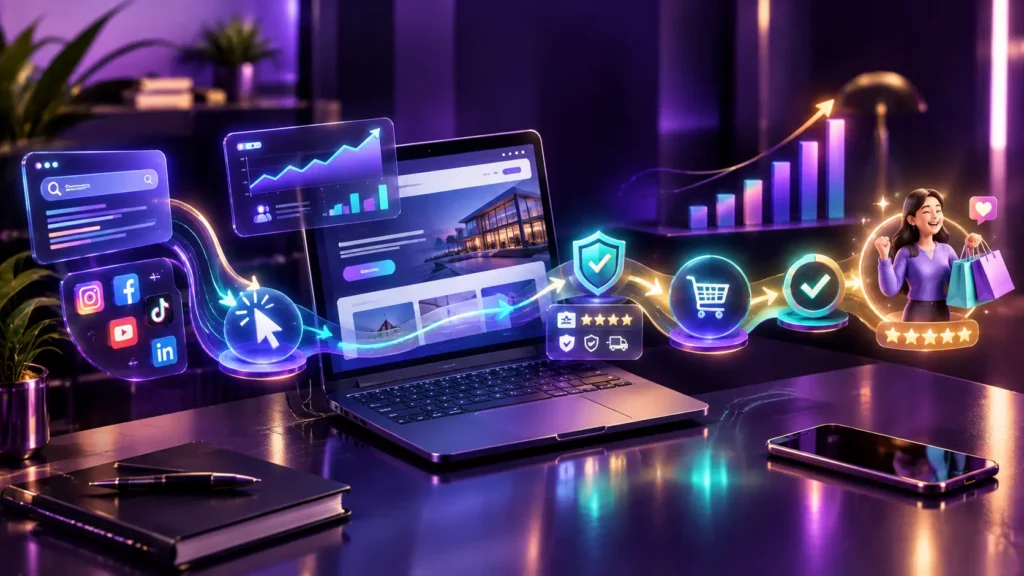
Recall your last online purchase. You maybe originally saw it on an Instagram Reel, came across someone raving about it, a You Tuber reviewing the product, or even as you were scrolling Facebook…You hadn’t planned on buying anything, but you were interested… That’s how social media has shaped how consumers buy. Today, a customer doesn’t just search and purchase a product. They learn, explore, compare, trust and decide in the digital experience.  1. Discovery Happens While We Scroll Social media has turned product discovery into part of our everyday scrolling. A person may open Instagram to watch entertaining content and suddenly discover a new brand. A short video, attractive image, or useful post can create curiosity within seconds. This means brands don’t always have to wait for customers to search for them. They can become part of the customer’s everyday digital experience.  2. Visual Content Creates Interest  We are hard-wired to connect with content that excites us. Images, short videos, Reels, Stories, product videos, and other creative visuals are tools that can aid customers in learning about a product faster. Instead of explaining how a product works, show them how it feels. And that is exactly why compelling content has become a huge staple in social media marketing. 3. People Look at Other People’s Experiences This is what many customers are asking before they buy: “What do other people think about this?”Reviews, comments, testimonials, unboxing videos and customer-generated content can all impact how a product or brand is viewed by consumers.With other people sharing their experiences you help your audience relate to the product. 4. Social Proof Builds Confidence Imagine two similar brands. One has hardly any activity online, whereas the other has social media pages, customer reviews, customer engaging content, and discussions around its products. The second brand will seem more real because evidence of other consumers’ behaviour is more apparent. This is called ‘social proof’-copying what other people have done or experienced before us.   5. Influencers Can Introduce New Products  A new bridge has been built thanks to influencer marketing, that connects brands with consumers.Individuals subscribe to creators for reasons like admiration for the content or admiration for their views. When a creator suggests a product, it seems more like a recommendation than an ad. But they still ask themselves if the recommendation is true, makes sense and seems honest. 6. Comments Can Influence Decisions Not only can you enjoy your own content. Possible customers could be reading comments to discover answers to: * Product quality * Pricing * Delivery * Customer service * Real experiences * Common problems A comment section may therefore act as an unofficial information source prior to a customer making a decision. 7. Social Media Makes Comparison Easier Being able to compare brands without having to go into a mall.Spend time shopping through thousands of product options, reviews, content, prices, features and customer experiences… all from your phone. This increases the value of transparency and stay in touch. 8. Personalized Content Keeps Brands Relevant User activity and interests help social sites show you content they believe you are more inclined to view.That means if two people are scrolling through the same feed, they may be seeing completely different brands and products. This is a dream situation for marketers as it offers them to try and target specific consumers with relevant content.  9. The Trip From Scroll To Sale Is Shorter Social media has joined action and discovery. A customer can: Browse Explore View Listen Read Opinions Follow the Journey Purchase. In fact, you may spend all of the this process in just one session. Links to products, ads, suggestions from creators, and shopping experiences lower the barriers to order for consumers who were curious to take the next step. 10. Emotions Still Matter A buying decision is a human decision behind every e-commerce.Consumers do not always buy a product based only on its features or price. Emotional responses like trust, elation, curiosity, community, confidence and ease can drive feelings towards a brand. That’s the secret to why social media marketing success isn’t just about selling your product. It’s about creating a connection.  11. Brand Personality Can Influence Trust People don’t just see what a brand sells. They see how it’s said.A distinctive personality can be constructed from the character of the captions, replies, videos, comments, images and stories. Inconsistent messaging Brand messaging that is inconsistent may lead to a confused impression. 12. Social Media Doesn’t Stop When the Purchase is Made The customer journey doesn’t end when a person clicks on ‘Buy.’ 2 After buying: Customers can leave reviews, open stories, write suggestions, ask questions, and engage with the brand. Your Purchase Experience Good post-purchase experiences can lead customers back to your business time and time again – and even help make them brand ambassadors. This implies that social media can be a very powerful way to bring in customers and retain them. 13. Trust Can Be Lost Very Quickly The very tools that enable brands to connect with an audience can catch them making a mistake. Negative reviews, ignored complaints, false claims, lack of communication and false information can quickly damage public perception of the business.This is the reason why social media marketing is not only about creating appealing content. It also includes listening, responding and managing customer relationships with special care. 14. People Remember Experiences, Not Just Advertisements People don’t always remember a promoter’s post, but they’ll remember how someone made them feel. Helpful content, fast support, good stories, useful answers, and real conversations… these are the means for forging a closer bond than any sales pitch.The brands you remember are the ones that do the most for you before they ask for your business. Final Thoughts How has social media impacted buying decisions? Selling has become more visual, social, interactive and personal thanks to social media. Brands discover us while we scroll, we’re informed via content, the experiences of others, we consider choices, then we trust before we act. This means that for business it should not be used for social media as just a posting spot to

Number give data, AI give insight.

The 5-Second Rule: What Makes People Stay on Your Website?

Picture a person arriving at your website for the first time; they glance at the screen for only a few seconds and then decide if they are going to browse further or go away. The first few seconds are important. In the field of digital marketing, your website has a very limited amount of time in which to make a good first impression. People want to swiftly work out who you are, what you provide, and the reason why they should care. If your website comes across as confusing, slow, old-fashioned, or hard to navigate, they might leave before finding out what your business is actually able to offer. What causes people to remain on a website?  1. A Clear First Impression What should your homepage tell visitors right away?A visitor shouldn’t have to sift through multiple pages to know what you do. Your main heading, body copy and images must tell the story of what makes you valuable. For example: “Grow Your Business with Smarter Digital Marketing”. A concise statement instantly communicates your mission to your visitors. 2. Strong and Simple Headlines  Your headline is one of the first things people see. Write on high-quality and clear headlines Do not use vague and difficult words, concentrate on a message that will reach your audience. Headlines should be concise, accurate and associated with the question your customers wish to get the answer to. Your headline should answer one simple question: “Why should I keep reading?” 3. A Clean and Attractive Design  A website need not be filled with animations, colors and graphics to be wow. Clean layout, generous spacing, easy-to-read fonts and consistent branding all help make your site more inviting and easier to navigate. People viewing your website should be able to concentrate on your message instead of trying to work out where everything is.  4. Fast Loading Speed  A well designed website will not be effective if it takes to long to load. People demand a fast browsing experience, especially on mobile devices. Slow image optimization, a load of useless scripts and a non-optimized page will only make things worse. A smoother experience can be achieved by optimizing images, removing unneeded elements, and enhancing performance. Well, fast websites are less likely to give your visitors an excuse to walk out on you.  5. Mobile-Friendly Experience  Many people find businesses on their smartphones. If you find your web site looks great on your desktop but feels a little harder to use on a mobile device, you may lose visitors.  Make sure your: Text is easy to read Buttons are easy to tap Images fit the screen Menus are simple to use Forms are mobile-friendly Pages load efficiently A quality website should look good and operate smoothly on every device. 6. Give Visitors a Reason to Continue. When visitors find out what you do, give them something to stick around for.Provide distinct sections that direct them to relevant content such as: Services Benefits Work/Results Testimonials Contact. This takes the guesswork out of the visitor experience by creating a path naturally.  7. Build Trust Quickly People search for reassurance that a company is reliable before getting in touch or making a purchase. You can strengthen trust through: Customer testimonials Reviews Case studies Portfolio examples Clear service information Professional branding Easy-to-find contact details Trust doesn’t come from just one thing…trust is built on the experience of your website. 8. Use a Clear Call-to-Action Tell your visitors exactly what you want them to do next. Use simple and noticeable calls-to-action such as: Get Started Explore Our Services Request a Quote Talk to Us. Contact Us Your CTA must be aligned with where the visitor is in the customer journey and take away any effort involved in taking the next step.  9. Make Your Content Easy to Scan Most people aren’t going to read all your copy The majority of your visitors won’t read a lot of the copy on your site at one time. They will scan and read the parts that catch their interest. That’s why your content should use: Short paragraphs Clear headings Bullet points Highlighted key information Simple language Relevant visuals A clean page allows your users to find their content more easily. 10. Keeping the Visitors There Isn’t the End in Itself It isn’t just about keeping a visitor on a page for a long period of time. What you really want is to grab your visitor’s attention, say what value you bring to the table, establish some credibility, and lead them to take a relevant next step. A visitor who is familiar with your brand and has found exactly what he’s looking for is worth more to you than someone just hanging around on your site and not doing anything useful.  Final Thoughts  It’s how a visitor’s experience begins on the site. Strong messaging, appealing design, quick loading speed, mobile-responsive experience, valuable content, trust signals, and excellent calls-to-action are all factors that can convert a quick visit into a longer one. There’s no unlimited time to leave a positive impression on your web site. Make those first few seconds count. Let’s Say hi…. At novadigi.info, a great digital presence means not just being “online” but creating experiences that grab attention, convey value and allow businesses to reach their audience. Want to make your website work smarter for your business? Find out how to market your business smarter at novadigi.info.  Frequently Asked Questions 1. How do I do the 5 second rule?  You only get 5 seconds for the 5-second rule. Visitors must grasp what your website is providing within the first 5 seconds of it loading.  2. What does it mean the “first few seconds are the most important for a website”?  This is the first few seconds of your website, and it can be the make-or-break moment to keep visitors on your page or take them somewhere else.  3. Why do people keep browsing your website?  Engaging content and clear call-to-actions combined with a compelling message, engaging aesthetics, easy navigation and swift loading time can trap visitors.  4. How do

Click Turn into Customers

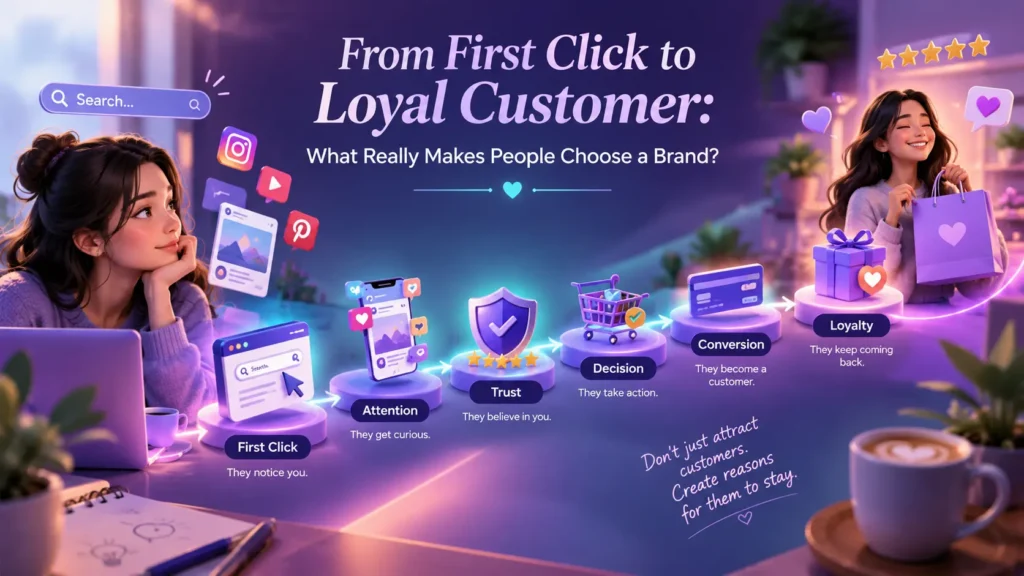
From First Click to Loyal Customer: What Really Makes People Choose a Brand?

A customer rarely becomes loyal to a brand after seeing it just once. Their journey usually begins with something simple-a Google search, a social media mention, a paid ad, a referral, or their initial visit to your website. Every single time they interact with you, they start developing an impression of your brand. They observe what your brand appears to be, what you say, how simple your web is to utilize, if individuals trust you and if your item or administration truly settles their issue. And that is why successful digital marketing is not only about generating clicks. It is about designing a customer journey that transforms the attention into trust, trust into action, and action into loyalty.  So, what really makes people choose one brand over another? Let’s explore the journey.  1] First Click: The Journey Begins With Attention  The first click is arguably the first point of genuine engagement with a customer.  A customer might discover your business through: Google search results Social media Google Ads Blog content YouTube videos Email campaigns Recommendations Online reviews  For now, they are not buyers, but just curious. Hopefully, you’ve wanted to make that very first interaction compelling and engaging enough to continue. A compelling headline, eye-catching visual, useful content, and strong message will make a prospect want to stop scrolling and engage with your brand. The first click gives the opportunity. The remaining clicks build the relationship.    2] Engagement: Provide Customers a Reason to Remain.  Getting someone to click on something is just the start. The moment a visitor lands on your web page or social media platform, they are bombarding you with questions:  What does this brand offer? Is this relevant to me? Can I trust this business? Why should I choose it?  Here is when your presentation of your brand is key. A professional website, clear navigation, simple messaging, engaging content, and consistent branding can make the customer experience much smoother Your content should quickly communicate: What You Do Tell visitors exactly what your business offers. Who You Help Display the sort of client or business your service is meant for. Why It Matters Write about how your customers are gonna get the most value by buying your brand. Customers with quick time-to-value have a reason to keep going.  3] Trust: The Turning Point in Customer DecisionsBased on a hundred keystrokes, what will your Next One, Next And Last? Attention can bring visitors. Trust can turn visitors into potential customers. People seek indicators of trustworthiness before they take action.  Some common trust-building elements include: Customer reviews Testimonials Helpful educational content Clear service information Professional website design Transparent communication Consistent social media presence Strong brand identity  Easy ways to contact the business People want to know that they are doing the right thing. This is why brands need to do more than just promote the promotion of their product or service.  Don’t only say, “We’re the best.”  Rather, let your customers know why they can trust you. Good information, honest communication, and a uniform customer experience is a more effective way to connect than just going for the sale. 4. Decision: Why Customers Finally Take Action  They may have already been introduced to your brand, were familiar with your offer and they trust what you give. Now they need a reason to act. That should be where your website and marketing strategy reduce friction.  A customer may be ready to: Make a purchase Request a consultation Fill out a contact form Book a service Subscribe to an email list Send a WhatsApp message Download a resource. Your call-to-action should be simple and clear. Don’t Make Customers Guess-Direct Them.  For example: Get Started Book a Consultation Explore Our Services Request a Quote Talk to Our Team A prominent CTA provides customers with a straightforward path from desire to action.   5. Conversion: The Click Becomes a Customer  Conversion refers to when a customer has completed the action you’re asking for. For example, a purchase, a query, a booking, a signup, or something else. However, conversion is not just about the last button. It’s the whole experience of clicking that button. Users will leave if your website is too slow to load, they find information they’re looking for unclear, the order process is difficult or they can’t get answers to simple questions. For this reason, a good digital marketing approach must take into account the entire customer journey. Let the journey flow seamlessly from the ad to the landing page, the content, to the CTA.   6. Experience: What Takes Place After the Conversion Counts  A lot of brands, I think, focus so much on getting a customer that they sort of forget, what are we going to do? But the post conversion or post purchase phase can also impact the customer’s future return.  A positive experience can encourage customers to:   Buy again Use another service Recommend the brand Leave a review Follow the brand online Stay connected through email or social media This is the moment your customer experience becomes a long-term marketing advantage. The customer must feel that there was an onus on the dealer to follow up after the sale.  7. Loyalty: Turning Customers Into Brand Supporters  A loyal customer is more than a repeat customer. Customers can also promote your organisation to others, interact with your marketing content, share their experience with their friends and would return to your brands again when they have another similar need. So how can brands encourage loyalty? Stay Consistent Maintain your messaging, quality, and customer experience. Keep Providing Value 3 Share content that provides value even when you aren’t selling anything. Listen to Customers Take notice of feedback, questions, reviews and issues. Stay Connected Use of email marketing, social media, helpful updates and individualised communication. Give Customers a Reason to Return Fresh content, offers, updates, helpful content and a great service to our customers can help give your brand a boost. Loyalty is Developed through Encountering Positive Experiences Again and Again — not through a Single Advertisement. The Complete Customer Journey   Customers can have a journey, perhaps a successful journey by:   First-Click-Attention-Trust-Decision-Conversion-Experience-Loyalty  Every stage has a different

AI 2026

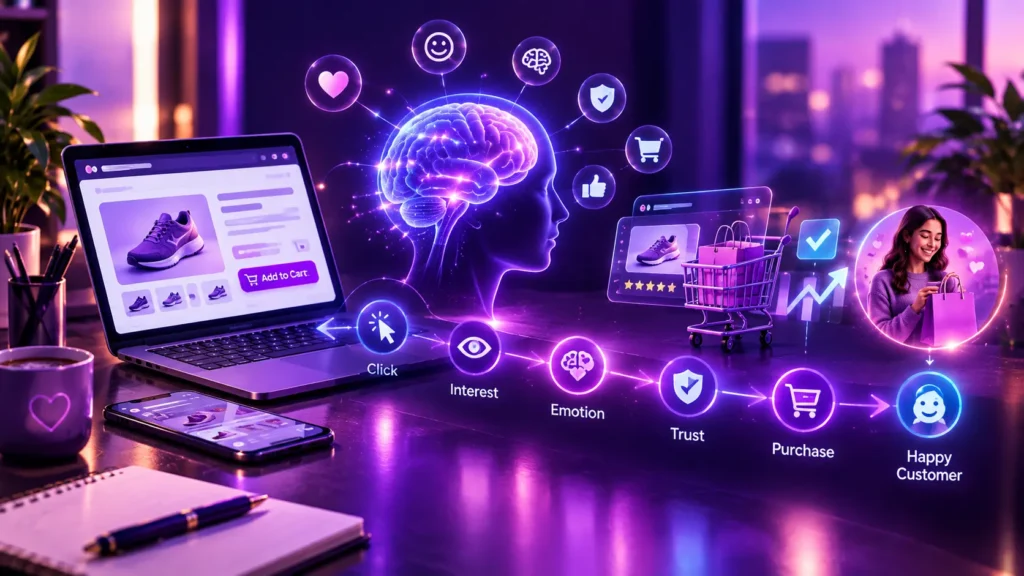
The Psychology Behind Every Click: What Makes People Buy Online

The Psychology Behind Each Click: Why Do People Make Purchases on the Internet? Ever wondered how people get to some website, see some products there, click a button and suddenly make a purchase? It seems to be a single click. But behind this click, there is a blend of such factors as *emotion, trust, curiosity, convenience, design and human psychology*. People do not necessarily make purchases because the products there are cheaper than anywhere else or the company has more functions than others. They make purchases when something is *relevant, trustworthy, valuable and convenient* for choice. And this is the reason why now it has become extremely important to understand consumer psychology. From Google search up to the checkout process everything is a digital touchpoint.  At *novadigi.info, we think that great digital marketing goes beyond simply making clicks. It involves knowing why people make clicks and why they move to the next step.  The Importance of Psychology in Digital Marketing Digital marketing targets customers at various buying stages. Your customer may start off finding your business on Google, check out your Instagram posts, visit your website, read reviews, compare your product to other options, and eventually purchase your product. Each one leaves an impression. Thus, effective digital marketing requires you to ask yourself not only: How can we get more traffic? But also: What do our customers need to experience before making a decision? Once you understand the consumer behavior of your target market, you will know how to approach them without being intrusive. Influences on Internet Purchase Decisions Based on Psychological Factors 1. Trust Before You Buy. The lack of trust in a brand hinders purchase decisions. Prior to making an online purchase, consumers will seek out signs of: * Valid reviews and testimonials* Accurate product/service details* Well-designed website* Secure checkout process* Contact details* Policies The site could have fantastic products but still fail to close the deal because it is untrustworthy-looking.  The site could have amazing products, but if it looks suspicious to the customer, he/she will never make a purchase due to distrust. Trust removes doubt and helps to take an action. 2. Emotions are More Important Than Reason in Decision-Making Process. It’s always easy for people to think that their decisions are totally rational, however, emotions play quite a big role in the process. Customers can buy something just to feel: *More confident;*time-saving;*presentable;*release from irritation;*easier life;*something enjoyable.* That’s why good marketing doesn’t concentrate only on product’s advantages, but also on -customer’s feelings- which it provokes. Instead of plain statement: Our service enhances your online presence. The following one sounds much better: Build an online presence which will make it easy to find, trust, and remember your brand. This second message connects the service with a meaningful result for the customer. 3. People Make a Choice on Simplicity Over choice leads to confusion. A website with complex navigation, long forms, confusing buttons, or excessive information might discourage the customer from taking action. Here *simplicity* comes into play. Ensure clear navigation, understandable content, narrow focus on the landing page, and good calls to action. Do not overwhelm the visitor with ten options; rather give him one right direction. Like this: *Discover Our Services → See Results → Contact Us* Simplicity minimizes obstacles. 4. Social Proof Increases Trust. If a customer sees other people using the same product or service, this can add to his feeling of safety. This is Known as social proof.  Social proof by brands is achieved via: – Reviews– Testimonials– Case studies– Ratings– User-generated content– Logos– Success stories Let us take an example of two agencies providing the same services. One says: “We provide digital marketing services.” The other provides information in the form of customer experiences, results, and testimonials. Brand number two provides more justification for its clients. 5. Scarcity Can Create Urgency People become more interested when the offer seems to be scarce. Phrases like: -Limited seats-Offer expires soon-Limited spaces create a sense of urgency.  Urgency can be effective only if it is legitimate. Artificial scarcity may harm the buyer’s trust, but actual deadline or scarcity may help the buyers who have some level of interest take a decision. 6. Good Design Impacts Perception. Before even getting to your content, users will perceive the design of your website. Layout, spacing, typography, imagery, buttons, color, and hierarchy all play a role in how the visitor perceives the site. Good design can convey: *Professional → Trustworthy → Modern → Valuable* whereas poor or outdated design might cause hesitation. Design doesn’t eliminate the need for effective marketing, but it can influence how people perceive your message. This is the reason why you need to make sure that your website looks nice and still functions well.  7. People Want to Be Understood. One of the most important psychological approaches used in marketing is that of relevance. It is much easier for customers to relate to something that addresses their issues directly. Don’t write about all that your company does – tell them why they need it. For instance: Finding it difficult to make yourself seen online? This directly addresses a potential customer’s problem. Then you can proceed with explaining how SEO, content marketing, SMM, Google ads or other services can help them solve this problem.  1-Psychology of the Customer Journey A customer’s decision process does not typically take place in one single click. It might resemble something like this: *Discover → Explore → Evaluate → Trust → Act → Purchase* 2-Discover First, the customer discovers his needs or problems. Search Engine Optimization (SEO), social networks, ads, and other types of marketing will get your brand noticed during this step. 3-Explore The customer visits your site, explores your services, consumes your content, looks for additional info. Here you should create an experience which would be helpful and understandable for a customer. 4-Evaluate At this point, a customer evaluates all available choices. Benefits, clear pricing information, FAQ section, reviews, case studies, and high-quality content can minimize customers’ fears. 

Click Turn into Customers

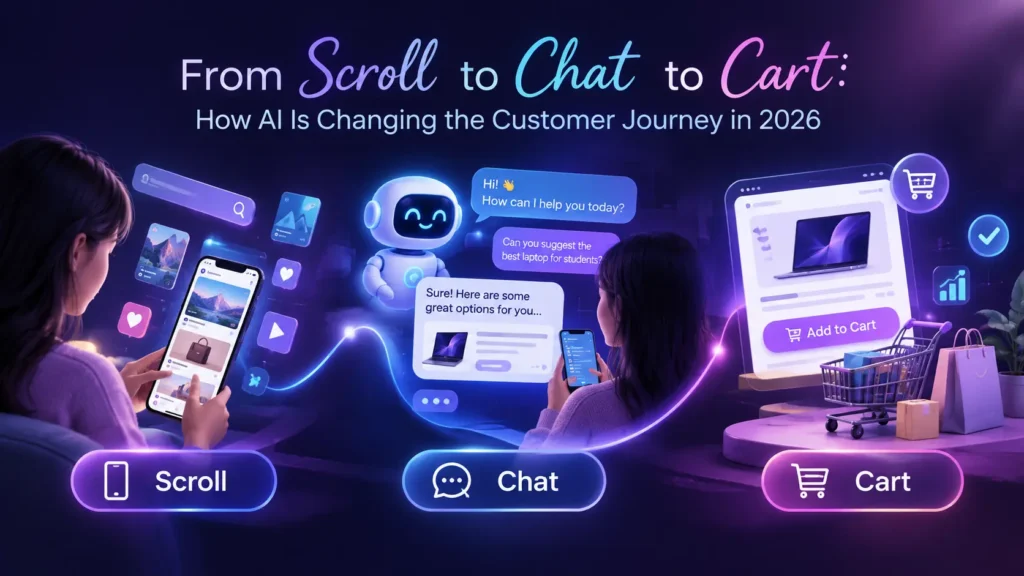
From Scroll to Chat to Cart: How AI Is Changing the Customer Journey in 2026

From Scroll to Chat to Cart: How AI Is Changing the Customer Journey in 2026 Novadigi Research Team 6 min read From feed discovery to instant messaging and streamlined checkout: AI connects every touchpoint of the modern customer experience. Think about your last online purchase. Did you sit at a desktop computer, type a product name into search, click the first link, and buy immediately? Probably not. More likely, your journey began while scrolling through your feed. You paused on a 15-second creator clip demonstrating a solution to an everyday problem. You skimmed comments, tapped a profile link, and watched a follow-up video. Later, an interactive message on WhatsApp answered questions about sizing and delivery. Before bedtime, you finalized the order in two quick taps. For business owners, this shift is profound. The traditional buying funnel—the predictable **Search → Website → Purchase** sequence—has dissolved. Today, the modern buyer follows a fluid path: Scroll → Discover → Watch → Ask → Chat → Compare → Trust → Buy At the center of this transformation is the **AI customer journey**. As we analyze key **AI marketing trends 2026** brings to digital commerce, artificial intelligence connects the dots across social media feeds, search engines, messaging apps, and checkout pages. Understanding how this connected journey works is essential for business growth. The Customer Journey Is No Longer Linear The **customer journey in 2026** is fluid, decentralized, and multi-directional. A buyer might discover your brand on Instagram Reels, watch a creator breakdown on YouTube Shorts, search your company on Google, read community reviews, ask questions via WhatsApp, and convert through a targeted email reminder. Shoppers discover, evaluate, and trust brands across diverse touchpoints: Instagram Reels and YouTube Shorts Creators and community reviewers Targeted social ads Search engines and AI answer overviews WhatsApp and direct messaging conversations Reviews and authentic user-generated content Consumers move between platforms before purchasing. Rather than expecting buyers to follow a rigid path, forward-thinking brands use **AI-driven marketing** to build responsive touchpoints that support prospects wherever they interact. From Scroll to Discovery — AI Is Changing What Customers See Discovery is no longer driven purely by search queries. AI recommendation systems predict consumer interest, introducing products before a shopper even thinks to search for them. Personalized Recommendations Algorithms analyze engagement signals—including watch time, repeat loops, and comments. Through sophisticated **AI personalization**, recommendation engines surface content tailored to individual lifestyles, helping brands connect with high-intent audiences with precision. Short-Form Video and Creators Short-form video is the gateway to modern discovery. When creators share authentic demonstrations or practical tips, they compress days of product research into thirty engaging seconds. In 2026, creator partnerships and **short-form video marketing** build buyer trust faster than traditional ads. This shift fuels the rapid rise of **social commerce**, where algorithmic feeds function as curated storefronts. Social Ads and Brand Visibility Organic reach alone rarely scales. Modern ad networks evaluate behavioral signals to display targeted offers. By connecting strategic [Internal Link: Paid SMM] campaigns with broader [Internal Link: Social Media Marketing] efforts, businesses place timely offers in front of users who have engaged with educational video content. From Discovery to Chat — Why Conversations Matter Discovery sparks curiosity, but hesitation follows. Questions about sizing, compatibility, delivery timelines, or return policies cause buyers to pause. In 2026, buyers rarely fill out static forms or wait days for email replies. They expect instantaneous, conversational clarity before spending their money. AI-Powered Conversations Modern **conversational commerce** uses intelligent chat assistants to answer common product inquiries, recommend matching items, and guide selections around the clock. However, automated tools work best with human oversight. Chat assistants should handle routine questions swiftly while allowing complex inquiries to transition smoothly to experienced team members. WhatsApp and Conversational Commerce For businesses in India and emerging markets, WhatsApp has evolved into a primary commercial channel. Direct messaging allows customers to explore product catalogs, ask questions, receive curated suggestions, and complete transactions inside a single chat window, bridging the gap from **social media to sales**. From Chat to Cart — How AI Can Reduce Purchase Friction When a customer is ready to buy, friction must be minimal. Modern **AI-powered shopping** workflows streamline checkout through practical tools: **Contextual Product Comparisons:** Smart widgets help shoppers evaluate options without leaving the product page. **Smart Offer Suggestions:** Automated systems suggest relevant bundles or free shipping thresholds right when hesitation occurs. **Predictive Retargeting:** Coordinated campaigns through [Internal Link: Google Ads] re-engage visitors with answers to common objections rather than repetitive ads. **Frictionless Checkout:** Streamlined mobile payments allow buyers to complete purchases in seconds. **Helpful Abandoned-Cart Reminders:** Timely follow-ups via WhatsApp or email address specific hesitations rather than sending generic discounts. Designing an end-to-end, **AI-powered customer experience** makes purchasing effortless without resorting to aggressive sales tactics. How AI Is Personalizing the Customer Experience Delivering a personalized **digital customer journey** means tailoring every stage of interaction based on customer intent. True **personalized marketing** extends far beyond inserting a subscriber’s first name into an email subject line. Content Using modern [Internal Link: Content Marketing] and flexible [Internal Link: CMS Solutions], brands serve educational guides to first-time visitors while showing returning customers relevant upgrades or reorder options. Advertising Machine learning optimizes ad creatives and bidding automatically, ensuring prospects see ad messages tailored to their level of brand familiarity. Recommendations Rather than showing random items, AI suggests complementary products based on actual purchase context—such as suggesting compatible memory cards and cases for a purchased camera. Follow-Ups Through automated [Internal Link: Email Marketing], businesses deliver helpful onboarding advice, care instructions, and warranty information that build long-term loyalty and enhance the overall **customer experience**. What This Means for Digital Marketing in 2026 Digital marketing cannot succeed in disconnected silos. Running social ads without coordinating with your website team or ignoring customer chat leads creates a disjointed experience that confuses prospective buyers. Success in 2026 requires connecting all key pillars: **SEO + SMM + Paid Ads + Content + Messaging + Analytics** When your [Internal Link: SEO Services], social storytelling, paid acquisition, and

AI 2026

Search Is Changing: How to Make Your Brand Visible in AI Search.

Overall Aim Develop an informative, up-to-date and clear blog post on the evolution of search due to AI-based search experience and ways for businesses to optimize their presence. The blog post must be mainly aimed at: Small and mid-size companiesStartup ownersBusiness ownersMarketing specialistsWebsite ownersBrands looking to boost their online presence and bring in customers It must be informative for the readers first and prove the need for professional SEO and digital marketing services naturally.  Brand Context Website/Agency: Novadigi.infoIndustry: Digital Marketing AgencyServices that apply to your brand:SEO, Technical SEO, On-Page SEO, Off-Page SEO, Content Marketing, Social Media Marketing, Paid SMM, Google Ads, Email Marketing and CMS solutions. Reference the digital marketing agency in the CTA or in one of the sections. Do NOT write the article in a promotional tone. SEO Requirements Main Keyword AI Search Secondary Keywords Remember to use variations, including: AI Search Optimization AI Search Visibility AI Overview AI Google Search AI Search Power SEO in 2026 Search Engine Optimization Generative AI Search Online Business Visibility AI Search Results Content Optimization Technical SEO Helpful Content People First Content Brand Visibility Digital Marketing Strategy Do not overdo keyword stuffing.Use keywords naturally and only where they make contextual sense. Suggested Meta Information Create: SEO Title: 50-60 charactersMeta Description: 140-160 charactersURL SlugPrimary Keyword5-8 Secondary Keywords Create an SEO title that is engaging but not clickbait. Structure of the ArticleH1: The Evolution of Search: Making Your Brand Seen in AI Search Introduction Use an engaging and relatable hook to start off your article. Mention how consumers are relying more and more on search experience powered by artificial intelligence to find out information, make comparisons and look into businesses. Explain how this means brands should think outside of the box of “ranked for a keyword. Keep the introduction conversational and easy to understand. How AI Search Is Impacting the Way People Search For Information? Define the difference between regular search and search with AI assistance. Describe the terms like: 1]natural language queries2]conversational search3]answers generated by AI4]multiple queries5]referencessearch paths including researching, comparing and discovering new things Do not overstate the issue and do not say that the traditional way of searching is becoming obsolete. What Is AI Search Visibility? Provide a simple definition of AI search visibility. State that the purpose is not to rank on Google but to produce valuable and credible content for machines to see and use if people ask the corresponding questions. Provide a practical explanation for business owners.  What Are Some Ways Businesses Can Increase Their Visibility on AI Search Engines? Split this topic into useful H3s: Generate Unique and Useful Content Explain how unique, useful, experience-focused, and user-oriented content is important. Compare generic AI content to useful content that solves customer problems. Give an example of useful content. H3: Boost Your Technical SEO Explain: Crawlability Indexation Internal links Mobile-friendliness Page experience Website architecture Accessible text content Appropriate use of structured data when necessary Answer Real Customer Questions Elaborate on how companies can come up with content based on genuine search intent. Some of these are:“What is the cost of SEO for a small company?”“How much time does SEO take?”“What is the digital marketing approach suitable for my company?” Elaborate on how comprehensive responses can be more beneficial than keyword stuffing. Develop Topical Authority Elaborate on how businesses can develop connected content in relation to their core services and topics. An illustration for a digital marketing agency will be:SEO → Technical SEO → Keyword Research → On-Page SEO → Link Building → Local SEO → AI Search Visibility Make Your Brand Credible Elaborate on: Business detailsExpertise of the authorCorrect claimsCase studies when possibleReviews/endorsementsCohesive brand informationUseful additional content Do not make up statistics, client outcomes or case studies. Use Internal Links Strategically Describe how internal links assist users and search engines in finding related webpages. Natural internal-link ideas include:SEO Services, Technical SEO, SMM, Paid SMM, Google Ads, Content Marketing and Email Marketing. Examples of suggestions include:[Internal Link: SEO Services][Internal Link: Technical SEO]Do not use fake URLs. AI Search Will Not Replace SEO This heading is important. Describe why traditional SEO principles are still valid for AI search. Distinguish between:Traditional SEOVisibility in AI searchHelpful informationTechnical accessBrand reputation Do not use such buzzwords as “AEO” or “GEO.” Explain why companies need to concentrate on their SEO and content instead of gimmicks.  Common Mistakes Brands Need to Avoid List 5–7 common mistakes, such as: Posting irrelevant AI-generated content without adding any valueKeyword stuffingCreating content for search enginesFailing to consider technical SEOPosting superficial answersCopying competitors’ contentCreating artificial or manipulated brand mentionsNeglecting user experienceAssuming there is some secret to appear in AI answers Be brief and practical in explaining each mistake. A Simple Strategy for AI Search Visibility in 2026 Develop a step-by-step plan that includes: Knowing your target audienceIdentifying actual questionsCreating valuable contentTechnical SEO improvementBuilding topic clustersImproving internal linkingBrand authority buildingMonitoring search visibilityContent updates.  Make this section actionable. How to Measure Your Visibility Discuss how businesses need to be tracking key SEO and business metrics, including: ImpressionsClicksOrganic trafficSearch termsEngaged sessionsConversionsLeadsRevenue if measurable Include references to Google Search Console and Google Analytics without directly stating them. Avoid claiming that search visibility through AI will ensure traffic, ranking or sales. Conclusion Finish your essay with an engaging conclusion. Discuss how the nature of search is becoming increasingly conversational and AI-driven, but at the end of the day, there are some basic components – good information, accessibility, relevance, authority, user experience. Connect this to the importance of having a solid digital marketing plan.  Frequently Asked Questions (FAQ) Generate 5 SEO-focused FAQS: What is AI Search?How is AI Search different from normal Google Search?How can I improve my company’s visibility in AI Search?Is SEO important for AI Search?Will AI Search help my company attract more customers? Answer each in 40 to 70 words. Don’t imply that your FAQs will bring rich results in Google. Call To Action (CTA) Write a professional call to action for Novadigi.info. The CTA should motivate business owners to enhance their SEO, web

Click Turn into Customers

Why Some Brands Get Clicks While Others Get Customers

Digital Marketing Strategy Why Some Brands Get Clicks While Others Get Customers Clicks are attention. Customers are action. Here’s what actually happens in the gap between the two — and how to close it. Every business owner knows the feeling. Your website traffic is climbing. Your ads are getting clicked. Your social posts are getting likes and shares. On paper, things look good. Then you check your sales numbers, and they don’t match the excitement. This is one of the most common frustrations in digital marketing: strong activity, weak results. It’s not because the marketing failed completely — it’s because clicks and customers are not the same thing. Clicks are attention. Customers are action. And the brands that consistently grow online have figured out how to move people from one to the other. In this article, we’ll break down why clicks vs customers is such a common gap, what causes it, and what businesses can actually do to close it — without relying on gimmicks or unrealistic promises. Clicks Are Not the Same as Customers Before fixing the gap, it helps to understand the stages between them. A person doesn’t go straight from seeing your brand to buying from it. They move through several steps, and each one has a different meaning: Impressions — how many times your content or ad was seen Clicks — how many people acted on curiosity and visited your site Website traffic — the overall volume of visitors, from all sources Engagement — time on page, scrolling, interacting with content Leads — people who share contact details or show buying interest Conversions — people who take the action you want, like a purchase or booking Customers — people who actually pay for your product or service A simple example makes this clearer. Imagine a local bakery running Google Ads for “fresh cakes near me.” The ad gets clicked 200 times in a week. That’s 200 people curious enough to look. But if the landing page is slow, doesn’t show prices, or has no way to place an order easily, most of those 200 will leave without buying anything. High traffic, low sales — not because the product is bad, but because the journey after the click didn’t hold up. Why People Click but Do Not Buy There isn’t usually one single reason conversions stay low. It’s often a combination of small gaps that add up. Here are the ones we see most often. The Brand Is Attracting the Wrong Audience Traffic volume feels good, but volume without relevance rarely turns into sales. If your SEO for businesses or paid ads are pulling in people who were never likely to buy — wrong location, wrong budget, wrong need — no landing page in the world will convert them. Targeting the right audience matters more than reaching the biggest one. The Landing Page Does Not Match the Ad or Search Intent If someone clicks an ad promising “affordable web design” and lands on a generic homepage with no mention of pricing or web design at all, they’ll bounce. Message consistency — between what was promised and what’s delivered — is one of the simplest ways to protect your digital marketing conversion rate. There Is Not Enough Trust People rarely buy from a brand they don’t trust, especially online where they can’t see or touch the product first. Missing reviews, no testimonials, vague “about us” information, or a website that looks outdated all chip away at brand trust before a visitor even reaches the pricing page. The Website Experience Creates Friction Confusing navigation, slow load times, a poor mobile layout, or a contact form with too many fields — each of these is a small obstacle. On their own they might seem minor, but together they’re often the real reason a visitor leaves without converting. The Call to Action Is Weak Visitors need a clear next step. Not five options buried in a menu, but one obvious action: “Book a consultation,” “Request a quote,” “Get started,” “Download the guide.” A page with no clear call to action is asking the visitor to figure out what to do next — and most won’t bother. What Makes a Click Turn Into a Customer? The flip side of the problems above is a set of factors that consistently improve conversion. The Right Message Messaging that speaks directly to the visitor’s problem, need, or goal performs better than messaging that talks only about the brand. People respond to “here’s how we solve X,” not “we’ve been in business since Y.” The Right Audience Reaching people who are actually looking for what you offer — based on intent, not just demographics — is the foundation of any customer conversion strategy. This is why intent matters as much as interest. A Strong Value Proposition Why should someone choose your business instead of the next search result? A clear, specific answer to that question — not a vague claim like “best quality” — gives visitors a real reason to stay and act. Trust and Social Proof Genuine reviews, case studies, client testimonials, certifications, and transparent pricing all reduce hesitation. Trust doesn’t need to be flashy — it needs to be visible and honest. A Friction-Free Customer Journey Every extra step, every unclear instruction, every slow-loading page is a chance for a visitor to give up. Simplifying the path from “interested” to “done” is one of the highest-value things a business can invest in. How Digital Marketing Channels Work Together One of the biggest misconceptions in online marketing is that a single channel should carry the whole job. In reality, conversions usually come from several channels working together as part of one connected digital marketing strategy. SEO Brings Intent-Driven Traffic People searching on Google are already looking for something. Strong SEO puts your business in front of them at the exact moment they’re ready to explore — which is why organic search often produces higher-quality leads than colder traffic sources. Social Media Builds Attention and

Click Turn into Customers

Search, Scroll, Click, Buy: How Digital Marketing Influences Every Customer Decision

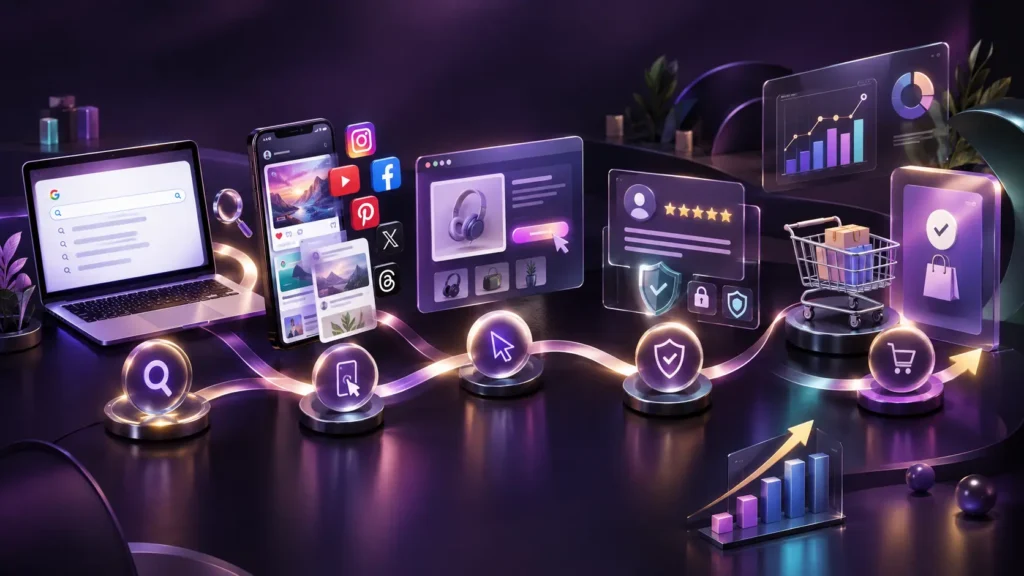
Today, customers rarely buy something the moment they discover it. Before making a purchase, they search on Google, scroll through social media, visit websites, compare options, read reviews, and look for reasons to trust a brand. This is where digital marketing plays an important role. From the first Google search to the final purchase, every online interaction can influence a customer’s decision. The journey can be simple: Search → Scroll → Click → Explore → Trust → Buy Let’s understand how digital marketing influences each stage of this journey. 1. Search: Where the Customer’s Journey Begins The journey of a customer may begin from a search. Some examples of searches include: Best digital marketing agency Affordable SEO services Best shoes for daily use Digital marketing services for small businesses This phase requires Search Engine Optimization (SEO), which ensures that the brand is found by potential clients at the point where they are searching for its products or services. Good website optimization, quality content, appropriate keywords, fast loading speed, and good user experience are some of the factors that could make a brand easily visible through search engines. Why is Search Important? The presence of your brand in relevant searches will allow you to reach out to your target audience when they need you the most. In other words, SEO is not all about getting more visitors to your website; rather, it is about getting the right type of visitors. 2. Scroll: Winning Attention on Social Media After searching, customers may discover a brand while scrolling through platforms such as Instagram, Facebook, YouTube, or LinkedIn. Social media has changed how businesses communicate with their audiences. A creative post, short video, carousel, infographic, or informative reel can make someone stop scrolling and pay attention. This is where Social Media Marketing (SMM) becomes important. Good social media content can help businesses: Build brand awareness Showcase products and services Educate potential customers Create conversations Build a recognizable brand identity Encourage people to visit the website The goal isn’t just to collect likes. The bigger goal is to create interest and connection. 3. Click: Convert Curiosity into Action Gaining attention is just the start. The next stage is converting curiosity into action. They will click on: Learn More Discover Our Services Shop Now Contact Us Get a Quote Here is where Google Ads, social media marketing, website design, and powerful content come into play. An ad can attract a user’s attention, but the landing page must deliver on expectations from the click. If the ad highlights a certain service but the landing page is difficult to navigate or misleading, then the potential customer may leave the site. This is why every click must be productive. 4. Explore: The Website Creates the First Impression Once a consumer comes across your website, he/she will start assessing your business. He/She might ask questions like: “What do I get from this business?” “Is the website professional?” “Do I trust this business?” “Aren’t the services clearly defined?” “Am I getting enough information?” “How easy is it for me to contact the business?” Your website serves as an online introduction to your business. With clear content, good navigation, powerful visuals, mobile friendly design, and effective call-to-action, you can create better experience for your consumers. It isn’t enough just to make your website look appealing. 5. Trust: The Role of Content Customers do not buy from the first business they come across. Often, they seek assurance before taking any action. In this case, Content Marketing can come in handy. Relevant blogs, articles, videos, case studies, frequently asked questions, social media posts, and helpful web pages can address customers’ concerns and prove the business’s expertise. For instance, if a person is interested in buying SEO services, he or she may start by reading: “What is SEO and why does your business need it?” And then go on to read: “How much does SEO cost?” After getting all the information, the person can feel confident in considering the business’s services. Content marketing makes the business look like an expert at solving customers’ problems. 6. Buy: Turning Interest into a Purchase Finally, the customer makes up their mind. They will either: Buy the product Schedule the service Fill out a form Send a WhatsApp message Schedule a consultation Make a phone call This is where the conversion process happens. A strong CTA makes it easier for you. Don’t leave your customers guessing about what comes next. Instead, lead them with straightforward actions such as: Get Started Schedule a Call Get a Quote Contact Us Easier next steps mean a better customer journey for everyone. 7. Email Marketing Allows the Discussion to Continue Not everyone is going to be able to buy on the first visit. There will always be some who require more time. This is where Email Marketing allows businesses to remain in touch with their possible customers. Email allows businesses to offer: Valuable information New services Updates about products Special promotions Educational material Company information Instead of letting go of the customer after just one visit to the website, Email allows businesses to keep in touch with their potential customers. 8. Data Can Help Optimize Everything Digital marketing does not consist solely of creativity; data matters too. It can be analyzed: Web traffic SEO Number of ad clicks Conversion rates Social media metrics Email marketing Behavior of customers All this information may be useful to find out which elements work well and which require improvement. For instance, when an ad receives many clicks yet has a poor conversion rate, there could be something wrong with the landing page, the offer, price or CTA, rather than the advertisement itself. Data makes marketers be more informed and less prone to make assumptions. 9. All the Digital Channels Work Together The major mistake that a company can do is to treat all the digital marketing channels separately. The SEO will get search traffic. Social media can help build awareness. Google Ads can help target potential

AI Search SMM 2026

“Digital Marketing Trends in 2026: Strategies Every Business Should Know”

The world of digital marketing keeps evolving at a very fast rate. The technologies, consumer behavior changes, AI, and social media trends keep changing the face of how businesses engage with their audience. By 2026, just creating a website or maintaining a presence on social media is not enough for any business to be visible and relevant. They have to adopt new strategies, create valuable content, deliver great customer experience, and go for data-driven marketing. If you are working for a small business, startup, or an already established company, learning about the trends in digital marketing in 2026 may prove to be useful for making better marketing decisions. What is Digital Marketing? Digital marketing is a process of promotion of a business, product or service using digital channels including search engines, social media networks, websites, e-mails, online advertisements, and content channels. The Latest Digital Marketing Trends in 20261. AI-Based Marketing AI has become a significant feature of modern digital marketing as businesses use AI to understand customers, generate content ideas, analyze data, and automate routine marketing tasks. AI can be used by marketers to detect behavioral patterns and make quicker and more informed decisions. Nonetheless, human ingenuity and reasoning skills will still play a key role in marketing. The right strategy would be to leverage AI but at the same time preserve authenticity and usefulness of the content. 2. SEO Is Getting Increasingly User-Centric SEO remains an important part of digital marketing. Nonetheless, modern SEO goes far beyond keyword stuffing on a page. Today, search engines prioritize user-centeredness of a page. For companies in 2026, the emphasis should be put on: Useful and unique contentSearch intentWeb performance and speedMobile optimizationSite architectureKeywordsInternal linksGood user experience An effective SEO plan will assist in making a company more visible and attracting potential customers who are looking for its products/services. 3. Social Media Marketing Becomes Increasingly Interactive Social media marketing is now becoming increasingly interactive instead of merely gathering followers. Short videos, story features, polls, comments, live posts, and community-centric content allow brands to establish greater connections with their audiences. Brands need to select channels according to the presence of their targeted consumers instead of being present on all possible networks. Regular and consistent use of social media marketing will help brands increase awareness, engagement, and communication. Interactive social media marketing is the future of social media marketing in the year 2026.Marketers have been using short videos, polls, stories, live sessions, and interactive content to engage customers. Companies are no longer limited to selling goods; rather, they are making content that initiates dialogue. Comments, shares, likes, and direct messages are ways of knowing what the audience wants from the brands.Moreover, interactive content can make the brand appear more relatable and friendly.Companies should concentrate on developing unique content tailored for their target audience. Consistency in social media can aid in the success of the company through increased brand awareness and customer engagement. 4. Short Videos Content The short videos remain a great way to convey information fast. Companies can leverage short videos for the following purposes: Product launch   Offering tips Answering frequently asked questions Behind-the-scenes footage Service explanation Customer experience Brand storytelling What really matters is not only to create videos but also to make them meaningful and interesting. 5. Content Marketing is About Providing Value Content marketing is still relevant as a digital marketing strategy, but people are getting choosier with what they want to be exposed to. Rather than developing content purely for the sake of doing so, it would make sense for brands to address their customers’ questions and issues. Some forms of valuable content include: Blogs Guides Videos Infographics Case studies Social media  posts FAQs Learning materials Content marketing can also help with SEO, social media, lead generation, and branding simultaneously. 6. Personalized Customer Experiences The customers wish to see that the company understands their interests and requirements. Personalization may be used in emails, web experience, advertising, product suggestions and customer communication. For instance, companies can offer product suggestions or content depending on previous customer interactions. The purpose is to make the communication as relevant as possible without creating an unpleasant feeling for the customer. 7. Data-Based Digital Marketing Data is a critical element in determining whether the marketing campaign has any impact. It becomes possible for organizations to measure their results in terms of: Website visits Interaction Conversion ratio Qualified leads CTR Customer acquisition costs ROI of the advertisement  Understanding the Behavior of Customers  Targeting the Appropriate Audience  Measuring Marketing Efforts  Taking Smart Decisions  Improving Ad Budget Utilization  Optimizing the Campaigns  Boost Rather than making assumptions, marketers have something tangible to work with in order to identify success factors and areas for improvement. 9. Email Marketing Still Has Its Uses Email marketing is still useful for companies in terms of communication, despite the rise of social media and other forms of marketing. This can be used by companies for: Newsletter distribution Promotions and discounts Product updates Educational material Contacting customers Building leads It is essential that emails sent to subscribers are relevant. 10. Google Ads and Performance Marketing Advertsing with payment can assist companies in finding customers faster. Services like Google Ads offer an opportunity to target potential customers depending on the searches, interests, location, and other aspects. Nevertheless, advertising without planning may turn out to be costly for businesses. Therefore, companies must set their objectives, choose a right target audience, build relevant landing pages, and constantly measure campaign performance. Google Ads and performance marketing provide an opportunity for businesses to get in touch with potential customers in time. Companies will be able to pay for campaigns in order to display ads on different digital platforms, including search results and websites. Choosing the right keywords, targeting a correct audience, and creating ad campaigns that bring benefits to companies will allow businesses to generate traffic and conversions more efficiently. By 2026, effective performance marketing will not be about the ability of companies to run advertisements, but to analyze and optimize

Scroll to Top